Affiliate disclosure: Links in this post are affiliate links. I may earn a commission if you sign up through them, at no additional cost to you.

FlatPay Review 2026
Small businesses need payment solutions that are simple, transparent, and reliable. Unfortunately, many traditional payment providers still rely on complicated pricing structures, hidden fees, slow payouts, and poor customer support.
5/28/20264 min read

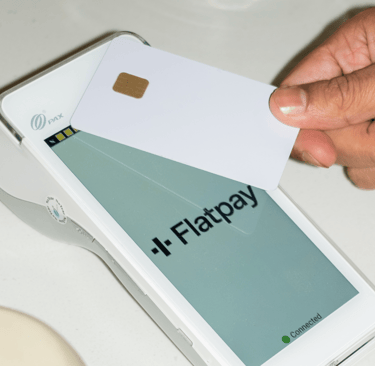
Is FlatPay the Right Payment Solution for Small Businesses?
Small businesses need payment solutions that are simple, transparent, and reliable. Unfortunately, many traditional payment providers still rely on complicated pricing structures, hidden fees, slow payouts, and poor customer support.
This is where FlatPay is gaining attention.
FlatPay positions itself as a modern payment provider focused on simplicity for local businesses such as cafés, restaurants, salons, retail shops, kiosks, and service businesses. Instead of overwhelming merchants with complicated contracts and unexpected costs, FlatPay offers a straightforward approach to card payments.
In this detailed FlatPay review, we’ll explore:
What FlatPay is
How it works
Key features
Pricing transparency
Pros and cons
Who should use FlatPay
Whether FlatPay is worth considering in 2026
What Is FlatPay?
FlatPay is a payment processing company designed primarily for small and medium-sized businesses that accept card payments in physical locations.
The company focuses on removing complexity from payment processing by offering:
No setup costs
No monthly subscription fees
One flat transaction rate
Daily payouts
Local customer support
Reliable payment terminals
The idea behind FlatPay is simple: merchants should clearly understand what they are paying for without dealing with hidden charges or confusing pricing models.
For many business owners, especially small retailers and hospitality businesses, that simplicity can be a major advantage.
How FlatPay Works
FlatPay provides payment terminals that businesses can use to accept:
Debit cards
Credit cards
Contactless payments
Mobile wallet payments
Instead of charging multiple layered fees, FlatPay typically uses a transparent flat-rate pricing structure.
This means businesses know exactly what percentage they pay per transaction, making monthly expenses easier to predict and manage.
After processing payments, merchants receive daily payouts, helping improve cash flow compared to providers with slower settlement cycles.
Key Features of FlatPay
1. Transparent Pricing
One of FlatPay’s strongest selling points is its pricing transparency.
Traditional payment providers often charge:
Setup fees
Monthly platform fees
Terminal rental fees
PCI compliance fees
Extra transaction charges
Hidden administrative costs
FlatPay simplifies this by offering:
Zero setup cost
No subscription fees
One flat transaction rate
For small businesses, this removes uncertainty and makes financial planning easier.
2. Daily Payouts
Cash flow is critical for small businesses.
Waiting several business days for payment settlements can create operational stress, especially for businesses with daily inventory or payroll needs.
FlatPay offers daily payouts, allowing merchants to access their money faster.
This feature is especially valuable for:
Restaurants
Cafés
Salons
Convenience stores
Local retailers
3. Reliable Payment Terminals
FlatPay provides payment terminals designed for physical businesses.
The terminals support:
Tap-to-pay
Chip cards
Mobile payments
Contactless transactions
Reliable hardware is important because payment disruptions directly impact customer experience and sales.
4. Local Human Support
Many business owners become frustrated with outsourced customer service and long response times from large payment processors.
FlatPay emphasizes local customer support with real human assistance.
This can make a significant difference for businesses that need quick issue resolution during business hours.
FlatPay Pricing Review
Pricing transparency is one of FlatPay’s biggest advantages.
Many payment providers use complicated pricing structures involving:
Interchange fees
Processor markups
Additional percentage fees
Monthly contracts
FlatPay simplifies this model by using a flat transaction rate.
Benefits include:
Easier bookkeeping
Better cost predictability
Fewer billing surprises
Simpler accounting management
For small businesses without dedicated finance teams, this simplicity is highly attractive.
Who Is FlatPay Best For?
FlatPay is ideal for businesses that:
Operate physical locations
Accept frequent card payments
Want predictable costs
Need faster cash flow
Prefer simple pricing
Value local support
Industries That May Benefit Most
Restaurants & Cafés
Fast transactions and daily payouts help manage operational cash flow efficiently.
Salons & Beauty Businesses
Simplified pricing makes it easier to control operational costs while improving customer checkout experiences.
Retail Stores
Reliable terminals and predictable fees are especially useful for local retailers.
Kiosks & Convenience Shops
Businesses with high card transaction volume can benefit from streamlined payment management.
Pros of FlatPay
Simple and Transparent Pricing
No confusing fee structures or hidden add-ons.
No Setup Costs
Businesses can get started without upfront investment.
No Monthly Subscription Fees
Merchants only pay based on transactions processed.
Daily Payouts
Improves cash flow and financial flexibility.
User-Friendly Payment Experience
Easy-to-use terminals and payment systems.
Human Customer Support
Access to local support instead of automated systems only.
Potential Drawbacks of FlatPay
While FlatPay offers many advantages, businesses should still evaluate their specific needs.
Potential considerations include:
Availability depending on region
Limited advanced enterprise-level features
Businesses with highly customized payment needs may require additional integrations
As with any payment provider, merchants should compare rates and features based on transaction volume and business model.
FlatPay vs Traditional Payment Providers
FeatureFlatPayTraditional ProvidersSetup FeesNoOften YesMonthly FeesNoCommonPricing StructureFlat RateComplex Tiered PricingPayout SpeedDailyOften SlowerCustomer SupportLocal Human SupportOften OutsourcedTransparencyHighVaries
Is FlatPay Worth It?
For many small and medium-sized businesses, FlatPay offers a compelling alternative to traditional payment processors.
The biggest strengths are:
Transparency
Simplicity
Predictable pricing
Faster payouts
Merchant-friendly approach
Businesses that value straightforward operations and want to avoid hidden payment processing fees may find FlatPay particularly attractive.
While larger enterprises with complex payment infrastructures may require more advanced customization, FlatPay is well-positioned for local businesses looking for a reliable and easy-to-understand payment solution.
Frequently Asked Questions (FAQs)
Does FlatPay charge setup fees?
No, FlatPay offers zero setup costs.
Does FlatPay have monthly subscription fees?
No, FlatPay focuses on a subscription-free pricing model.
Who should use FlatPay?
Small and medium-sized physical businesses such as salons, restaurants, cafés, and retail stores.
What makes FlatPay different?
Transparent pricing, daily payouts, and local customer support are key differentiators.
Is FlatPay good for salons and cafés?
Yes, businesses with regular card transactions and cash flow needs may benefit significantly from FlatPay.
FlatPay stands out by solving one of the biggest frustrations merchants face: payment processing complexity.
Instead of overwhelming businesses with hidden charges and confusing pricing structures, FlatPay focuses on:
Clarity
Speed
Simplicity
Reliable support
For cafés, salons, restaurants, retail shops, and other local businesses, FlatPay can be a strong option for streamlining card payments while maintaining predictable operating costs.
If your business values transparent pricing and faster access to revenue, FlatPay is definitely worth considering in 2026.
info@peopleandfinance.org